overPAK shipping cushions for wafer carriers
Vacuum-Formed Carton Inserts / Custom to Your Carrier

overPAK™ Shipping Cushions for Wafer Carriers

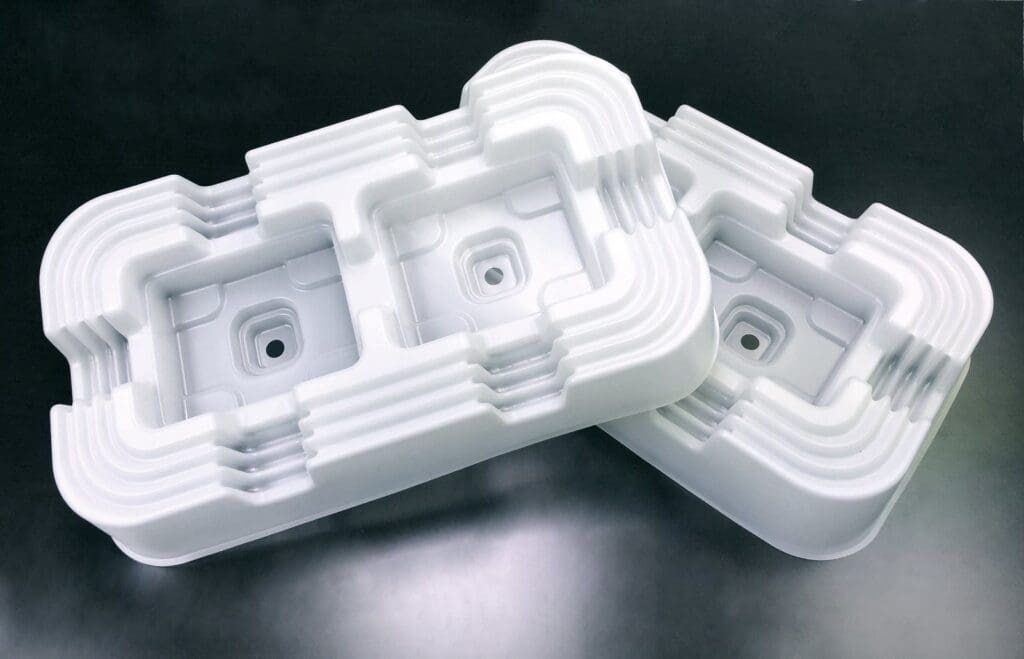
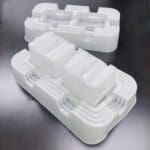
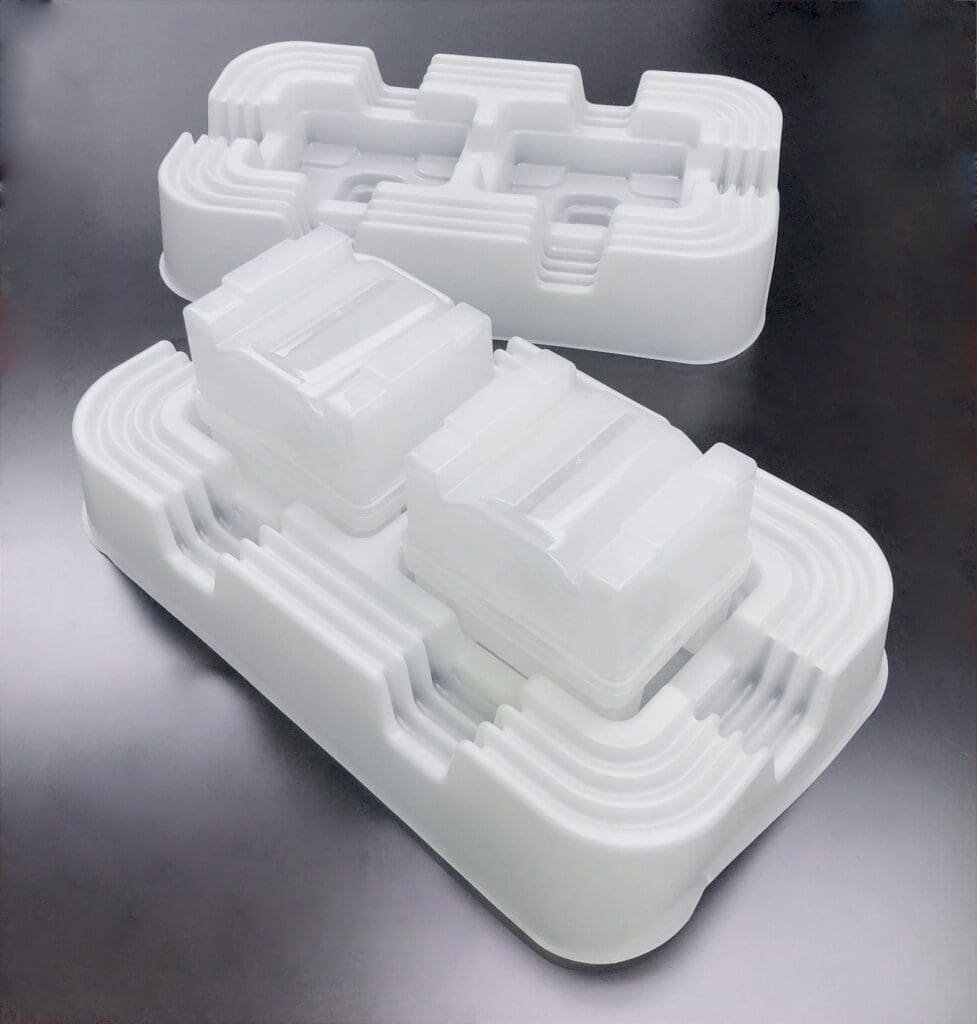
overPAK™ replaces foam in the shipping carton with two vacuum-formed shells, a bottom and a top, formed to your carrier. Accordion-profile corners take the hit in a drop before it reaches the product, and empty shells nest, so they take far less warehouse space than foam.

ISTA 2A Drop Test Passed
>80% Less Shock to the Carrier
1.2 m Repeated Drops, Carriers Intact
4 Packing Steps
  • ✓
    Crumple-Zone Corners
    Accordion-profile corners and walls take the hit in a drop before it reaches the carrier.
  • ✓
    Carrier-Specific Cavities
    Each set is formed to the carrier outline, so the carrier cannot shift inside the carton.
  • ✓
    Nested Storage
    Empty shells nest, so they take much less warehouse space than foam and cost less to ship.
  • ✓
    Four-Step Packing
    Bottom shell, carriers, top shell, seal the carton. No loose fill.
  • ✓
    Reusable Shells
    Vacuum-formed in PP, clear PS or HIPS, including recycled PS, and reusable for multiple shipments.
  • ✓
    Custom to Your Product
    ePAK designs sets for any carrier or product, to its outline, the quantity per carton and the carton.
Nested overPAK cushion halves
Tall eLX wafer canister seated in an OverPak outer shipper

How overPAK Works

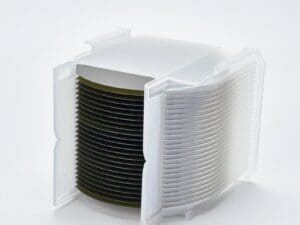
A closed wafer carrier protects the wafers, but the carrier itself still has to be held in place inside the shipping carton. overPAK does this with two vacuum-formed shells that take the place of foam.

The bottom shell lines the base of the carton, and the carriers sit in cavities formed to their outline, so they cannot shift. The top shell goes over the carriers and locks them in place before the carton is sealed. Packing takes four steps and no loose fill.

The protection is in the shape of the shell. The corners and walls have an accordion profile with built-in crumple zones. When the carton is dropped, these zones fold and absorb the impact energy before it reaches the carrier. In testing, overPAK passed the ISTA 2A drop test, cut the shock that reaches the carrier by more than 80%, and kept the carriers intact after several 1.2 m drops. 100 wafers, SiC and Si, came through with zero defects.

Empty shells nest inside each other. They ship and store as a compact stack instead of bulky foam blocks, which saves warehouse space and shipping cost, and the shells can be reused for multiple shipments.

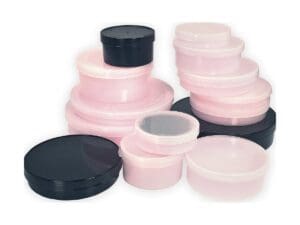
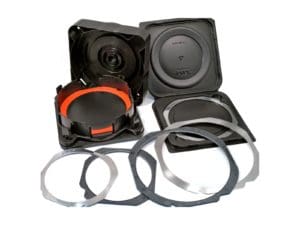
overPAK is vacuum-formed in PP, clear PS or HIPS, including recycled PS. ePAK makes sets for its own canisters, jars, wafer boxes, FOSBs and frame carriers, and designs custom sets for any other carrier or product.

View Specifications
Packing sequence

How an overPAK Set Is Packed

The same four steps apply to every overPAK set. Close the carriers, and bag them where your process requires, before they go into the carton.

  1. Bottom Shell

    Place the bottom overPAK shell in the base of the shipping carton.

    Cushion set overPAK™ bottom shell
  2. Insert Carriers

    Seat the closed carriers in the formed cavities of the bottom shell.

    Carriers eLX™ Zero-Movement Canisters
  3. Top Shell

    Place the top shell over the carriers so it locks them in place.

    Cushion set overPAK™ top shell
  4. Seal and Ship

    Close and seal the carton. The carton is sourced separately and sized to the set.

Why overPAK Instead of Foam

Results from ePAK drop testing; qualify your own carrier, pack weight and carton.

Accordion Crumple Zones

The corners and walls of the shell fold in a drop and absorb the impact energy before it reaches the carrier.

Built into the vacuum-formed shell

ISTA 2A Tested

overPAK passed the ISTA 2A drop test, and carriers stayed intact after several 1.2 m drops.

ISTA 2A | Several 1.2 m drops

More Than 80% Less Shock

In ISTA 2A drop testing, the shock transmitted to the carrier was more than 80% lower than with traditional cartons.

>80% less shock at the carrier

Zero Wafer Damage in Test

100 wafers, SiC and Si, were tested in overPAK sets with zero cracks or defects.

100 wafers | SiC and Si | Zero defects

Ships and Stores Nested

Empty shells nest inside each other, so stock takes much less room than foam in your warehouse and costs less to ship.

Nested stack | Reusable shells

Typically Half the Price of Foam

A vacuum-formed shell uses less material than a foam block cut to the same carrier, is recyclable and can be reused.

Typically 50% of the cost of foam

What We Make overPAK For

Sets for ePAK carriers, and custom sets for your product

Wafer Carriers

  • ✓ eLX™ and Universal wafer canisters, 150 to 300mm
  • ✓ eJR wafer jars, 4 to 8"
  • ✓ ePRO™ wafer shipping boxes, 100 to 200mm
  • ✓ 300mm eFOSB

Your Product

  • ✓ Any other carrier, box or component
  • ✓ Designed to the outline, the quantity per carton and the carton
  • ✓ Send a drawing or a sample for a proposal

Specifications

Technical specifications and ordering information.

overPAK Specifications
Construction Vacuum-formed bottom shell and top shell per set
Shock Absorption Accordion-profile corners and walls with crumple zones
Drop Test ISTA 2A passed; carriers intact after several 1.2 m drops
Shock Reduction More than 80% less shock reaches the carrier
Wafer Test 100 wafers (SiC and Si), zero defects
Materials PP, clear PS or HIPS, including recycled PS; conductive PS (eM-20-BLK) and anti-static APET for selected models
Carriers per Set 1 to 8, depending on the carrier
Storage Empty shells nest
Reuse Reusable for multiple shipments
Packing 4 steps
Carton Not included; sourced separately

Replacing foam in your shipping carton?

Send the carrier or product, the number per carton and the carton size, and ePAK will propose an overPAK set or a custom design.

Contact Sales

Frequently Asked Questions About overPAKs™

Common questions about overPAK shipping cushions

Technical Documentation

Need technical specifications for your project? Technical drawings, datasheets, and 3D models are available upon request.

Contact Engineering